The Absurdity in the Pristine
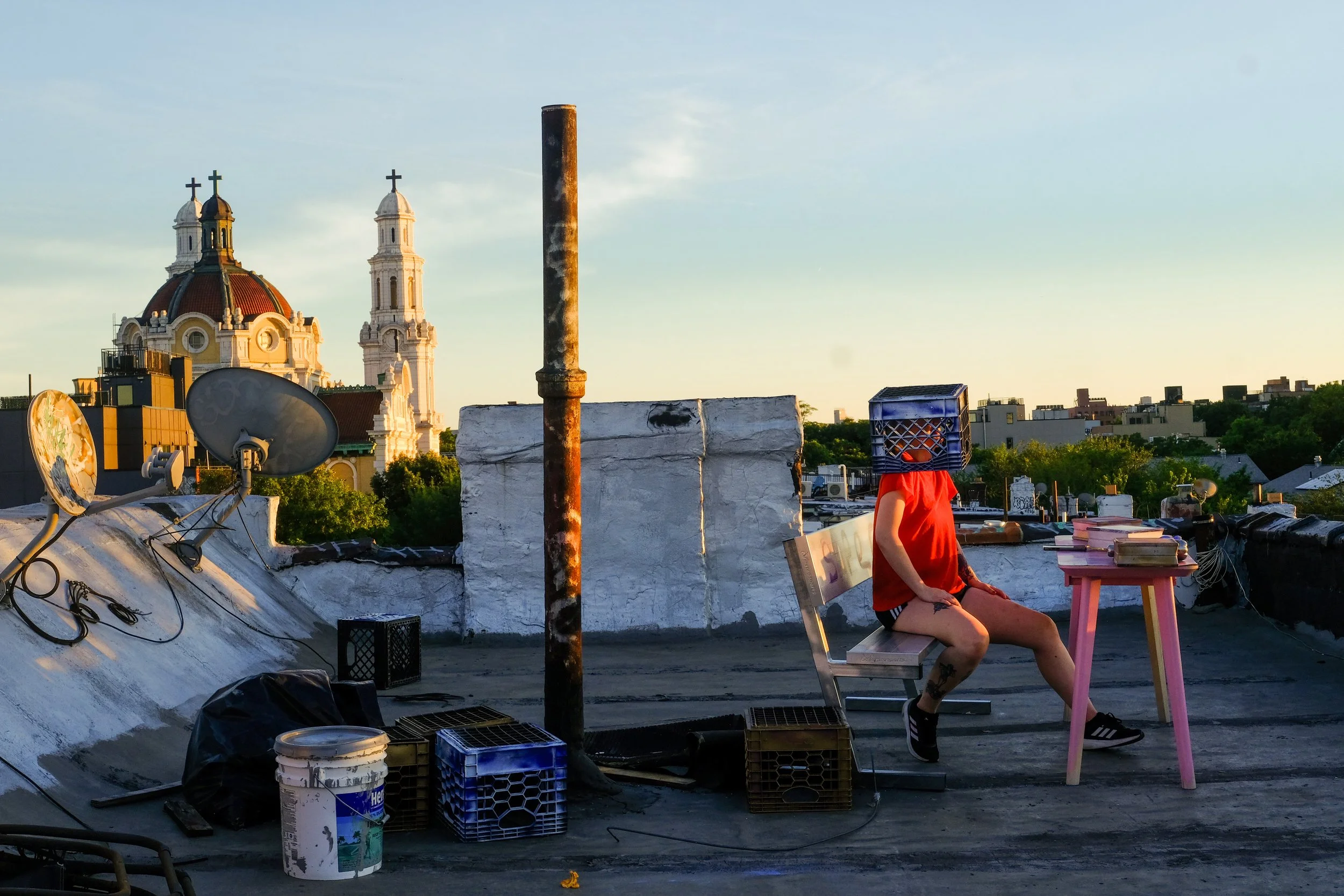
My roommate, Claudia, on our apartment roof in Bushwick.
A few months ago I attended a philosophy symposium in my hometown Boise, raised my hand after the introductory questions, and jokingly asked, “Why?” The woman hosting the event shot back “Why not?” and, smiling, I couldn’t argue.
Sometimes I believe there is no why, like Philipe Petit when he tight-rope walked between the twin towers in 1974, rejecting a need for any logical explanation of his poetic pursuit. These questions of “why” oftentimes begin simply— but you may find that very soon they will become gray. For my “why”, as a photographer who just landed in New York City, I prioritize visiting the International Center of Photography. Why? Because the institution is based on upholding photographic integrity. Why? To preserve and share the historic and evolving knowledge around the medium. Why? Because they and I value it. Why?
This is where we tend to branch off into different directions. Some will even say if you keep asking the question, it will always just lead to preference. For others, the question will continue to stand.
On my third day in the city, ICP was hosting a book talk on Brooke DiDonato’s new release Take a Picture, It Will Last Longer. I didn’t recognize her name at the time, but when I walked inside, I had remembered seeing her photos somewhere at some point. It was the type of work that stamps an impression from the absurdity of it. They were mostly set in a charming and quaint home environment, softly colored and very clean. But there is an absurdity in the photographs. She has posed herself in odd positions that counter the way we feel like we should be existing in a room. Her head is in the ceiling. She is lying above the ceiling fan, flat. And we’re left staring into the absurd and asking, why?
In her talk, she explained it as an invitation to immortalize these odd occurrences. What DiDonato also does is give a visualization to what it might look like if the rules we’ve been following happened to change. It asks: why don’t we stand behind the window shades in our room? What are the reasons we tend to exist in our homes and spaces the way that we do? And maybe something further: are we following what is normal just because of others’ perception, or because we often forget that we can exist more strangely?
I told a friend of mine, Serena, about DiDonato’s work, and she said that it reminds her of the hypocrisy of life. “It is like having to adhere to a pristine surrounding that contains us… and yet life is absurd. Then, the sterility of the environment makes it more absurd.” She references the cleanliness of the home pictured, tying it to the magazine publication Architectural Digest, and jokingly asked: “Is that even a lived-in home?”
The pristine and precise environment is another layer of DiDonato’s work of which her body is existing in. In an apparent lived-in space there is no visual proof of it being occupied: there is no mess in this carefully crafted picture. And yet, we are people in which the extent of our various quirks are attributes of us being human— quirks that are reflected in our common spaces.
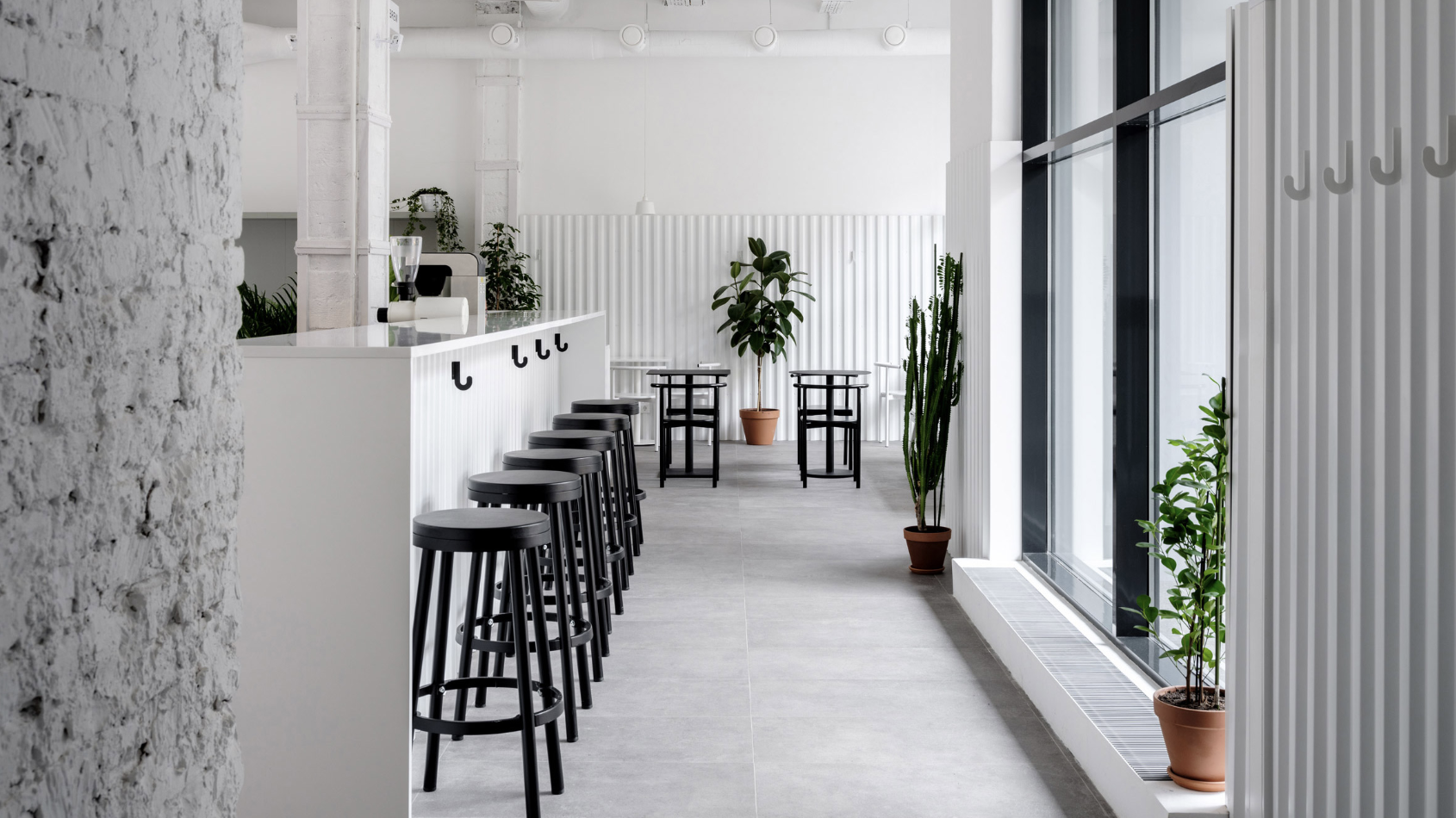
To her mention of pristine environments, I think about the cafes and shared spaces that are often described as “sterile” because of its limited characterization, simplistic design, and perfectly white or gray interior, and I wonder that if there are no defining attributes in this space, then who is the space for?
As clean and modern as can get, a pristine cafe would ideally be available to host anyone: a blank slate. However, when I walk into such a place, I personally feel unable to relax, walk funny, or even to have a stain on my shirt. Walking into such a place brings an expectation of how to behave: If I don’t present myself as normal here, then I exist in direct friction to the space.
This idea is similar to the problems of living in a society. Without discounting a society’s creation of structure, space, and opportunity for the people who live there, it also restricts. It implements social expectations (boxes and categories for the people) so that the living body (society as a whole) can work in unison. If in the case you stop in your tracks and stare directly into a wall of a building, similar to a DiDonato character— you are strange. If you enter a restaurant and begin to jump around— you are suddenly unwelcome. It is funny to imagine while also absurd to think about the following: Why do we follow these rules? To collectively adhere to something more “ideal”? This question is just as valid as the question we are left with when looking at DiDonato’s photographs.
In his essay The Plight of the Individual, Carl Jung argues of the societal measurement of man. He writes that man cannot truly be quantified because to do so would be to reduce him to statistical averages, which counters the very thing that makes him human— his distinct behavior and oftentimes strange impulses. But this is exactly what society is designed to do in order to define who is welcome and who is not: restricting behavior of man makes for a more orderly, clean world. It is as if constructed life is attempting to sterilize the strange tendencies we naturally have, and want to carry out.
So, back to the question, who is allowed to eat at this cafe? I wouldn’t imagine one of DiDonato’s characters would be.
I don’t only enjoy DiDonato’s work, but I also believe in it. The absurdity, paired with humor, creates a picture that we don’t know very much about because we have always followed the rules. I think that while a part of why people cannot look away from her work is the humor in it, perhaps it is also because they themselves want to be allowed to act a little strange, too.
Essay inspired by Brooke DiDonato’s new book release. Find her work and buy her book on her website here: https://www.brookedidonato.com/
Author’s Note: Several months ago. I stuck my head into a pantry. I was cleaning my pantry space before leaving the home I was staying at. After removing my items, I had paused then moved my head inside the small space. I stayed there for a minute before I pulled back out and continued cleaning. The absurd thing I did had its way of reclaiming a sort of agency and presence that often gets whisked away in the whirl of living. Think of me strangely— it’s my own form of rebellion.
I’ve lived in Brooklyn for a month now. Part of why I’m really enjoying it is because— from what I’ve seen so far— Brooklyn doesn’t pretend. It’s wild at times and busy and it’s far from clean, but the people are real and they come from all walks of life. There are messes on the streets and yelling and speakers bumping in passing cars at one in the morning. Much of the city doesn’t hide who it is.
It’s not at all “sterile”, and I think this is why people love it.
Special thanks to my roommate Claudia for the DiDonato-inspired cover photo on our Brooklyn rooftop.
…and just for laughs: https://www.instagram.com/reel/DZL89JSBKoD/?igsh=NTc4MTIwNjQ2YQ==
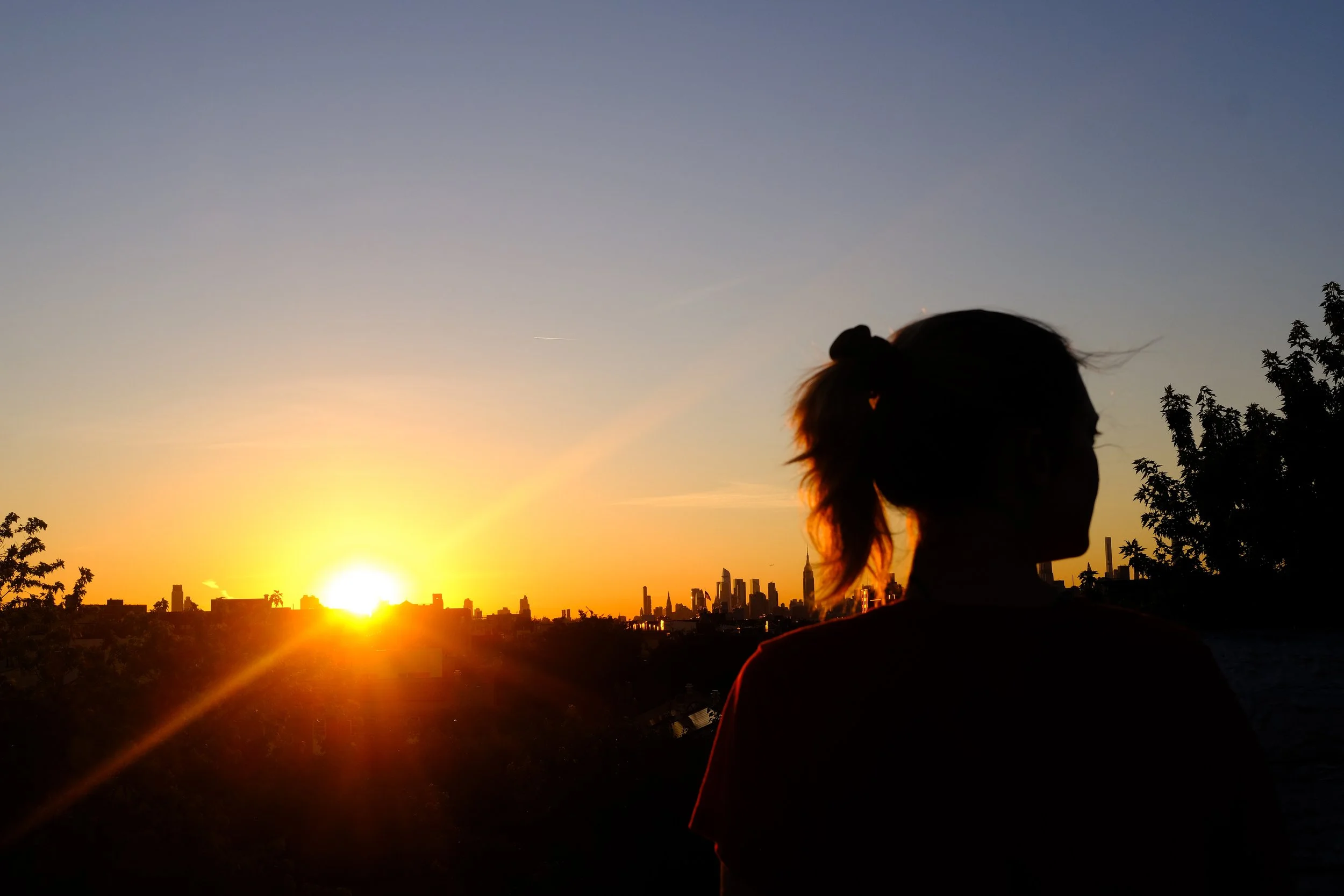
Claudia and Manhattan at sunset.